
Roulette has evolved through numerous digital adaptations that maintain the recognizable wheel structure while introducing unique rule modifications. Penalty Roulette represents one such variation where additional gameplay conditions influence how wagers are handled after a spin. While the wheel layout and primary betting categories remain consistent with traditional roulette, the defining characteristic lies in how the game applies a penalty condition under specific outcomes.
The concept of Penalty Roulette centers on the possibility that a spin result may trigger a rule affecting placed bets, altering either the payout process or the wager resolution. This adjustment adds an extra layer to the traditional roulette format, creating a structure where both the spin result and the penalty condition influence the final outcome of the round.
Standard Roulette Wheel Framework
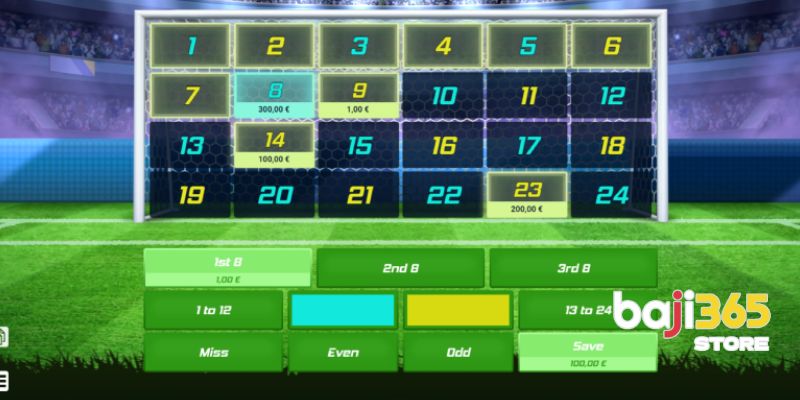
Despite the added rule variation, Penalty Roulette operates on the same wheel structure commonly associated with European roulette. The wheel contains 37 numbered pockets ranging from 0 through 36. Each spin represents an independent event in which the ball lands randomly on one of these numbered compartments.
See more:
- American Blackjack: Expert Tips for Winning at American Blackjack
- Quack Squad: Discover How to Play and Win in Quack Squad Game
The familiar betting grid is also preserved. Players may place wagers on a variety of inside and outside options:
- Straight-up bets on a single number
- Split bets covering two adjacent numbers
- Street bets covering three numbers in a row
- Corner bets covering four numbers
- Line bets covering six numbers
- Dozen bets covering twelve numbers
- Column bets
- Outside bets such as red or black, even or odd, and high or low
Because these betting structures remain unchanged, individuals familiar with roulette layouts can quickly understand the placement of wagers within Penalty Roulette. The main difference occurs once the spin outcome is determined.
See more:
- Neptune Bingo: How to Play Neptune Bingo and Increase Your Chances of Winning
- Plinkox: A Step-by-Step Guide to Playing and Winning at Plinkox
- Peek Baccarat: How to Play Peek Baccarat and Win More with Expert Strategies
The Penalty Feature Explained
The central mechanic that defines Penalty Roulette is the presence of a penalty condition linked to certain outcomes. When a qualifying event occurs during the spin, a rule is applied that affects active wagers.
The exact form of the penalty may vary depending on the table configuration, but the general framework follows a consistent pattern:
- All wagers are placed before the wheel spin.
- The wheel determines the winning number.
- If the result triggers the penalty condition, a special rule modifies how wagers are resolved.
For example, the penalty may involve the partial reduction of certain bet payouts, the removal of specific wager types, or the adjustment of how losses are processed. The penalty condition is typically displayed clearly within the game interface so that participants understand how it applies during each round of Penalty Roulette.
See more:
- Roulette and Blackjack: How to Master Roulette and Blackjack for Maximum Wins
- Game Shows: Top Game Shows You Can Play and Win Big
- Anmingo Rules: Complete Guide to Anmingo Game Rules and How to Play
Payout Structure And Game Balance

Roulette variants that introduce additional mechanics must adjust payout structures to maintain balance within the game. In Penalty Roulette, the presence of a penalty rule can influence how certain bets are valued.
Traditional roulette pays fixed returns for each wager category. For example, a straight-up bet normally pays 35 to 1 on a European wheel. When a penalty mechanic exists, the table may retain standard payouts but apply the penalty condition selectively when triggered.
The design objective is to ensure that the game maintains a stable mathematical framework while incorporating the added rule. This ensures that the overall experience remains consistent with roulette while still presenting a distinctive gameplay variation.
See more:
- Poker: Learn How to Play Poker and Improve Your Winning Strategy
- Andar Bahar: Ultimate Guide to Playing Andar Bahar and Winning Big
- Teen Patti: Tips and Tricks to Win at Teen Patti Every Time
Probability And Outcome Distribution
One important aspect of Penalty Roulette is that the penalty feature does not alter the probability of numbers appearing on the wheel. Each number still carries the same statistical likelihood of being selected during a spin.
The wheel remains governed by the same random mechanics as other roulette tables. What changes is the consequence associated with certain outcomes.
The following comparison illustrates how the game differs from a traditional roulette table:
| Game Element | Traditional Roulette | Penalty Roulette |
| Wheel Layout | European Single Zero | European Single Zero |
| Number Probability | Equal Distribution | Equal Distribution |
| Special Mechanics | None | Penalty Rule Activated |
| Outcome Resolution | Standard Payout System | Modified By Penalty Condition |
| Gameplay Variability | Stable | Rule Based Variation |
This framework demonstrates that Penalty Roulette at Baji365 casino retains the core mathematical properties of roulette while introducing an additional rule that modifies the resolution of certain rounds.
Strategic Interpretation Of The Penalty Mechanic
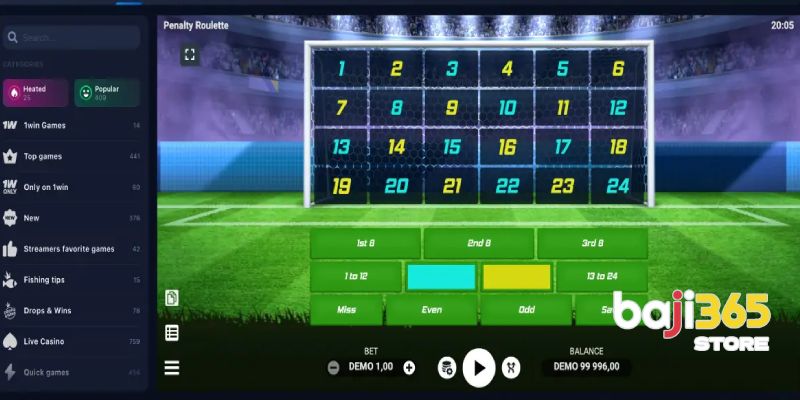
Roulette outcomes remain random regardless of the variant being played. As a result, strategy in Penalty Roulette generally revolves around interpreting how the penalty rule may influence different bet categories.
Some players prefer wider coverage through outside bets because these wagers provide more frequent outcomes, even if the payout level is lower. Others may concentrate on inside bets that offer higher returns when successful. The presence of a penalty condition can influence how risk distribution is perceived during each round.
However, it is important to note that no betting pattern changes the independence of spins. Each round begins with the same probability structure regardless of previous results. The penalty mechanic simply introduces a rule that affects the outcome resolution process rather than the likelihood of numbers appearing.
See more:
- Live Games: Experience the Most Exciting Live Casino Games Online
- Slots: Explore the Best Slot Games and Win Big Today
- Live Crazy Time: A Complete Guide to Playing and Winning at Live Crazy Time
Comparison With Other Roulette Variants
Within the broader category of roulette games, variations are typically grouped according to the type of mechanic they introduce. Some formats use multipliers, others rely on progressive elements, and some employ rule-based adjustments.
Penalty Roulette belongs to the category of rule-driven variants. Instead of altering payouts with random multipliers, it introduces a conditional rule that activates when a particular outcome occurs. This design distinguishes it from multiplier-based formats while still maintaining the recognizable roulette layout.
The defining characteristics that separate Penalty Roulette from other roulette styles include:
- The presence of a rule that can modify wager outcomes
- A penalty condition tied to certain spin results
- Traditional wheel probabilities maintained
- Standard betting layout preserved
These features position the game between classic roulette and modern feature-based variants, offering an additional rule layer while maintaining familiar gameplay elements.
See more:
Roulette Game Structure At baji365

Online platforms often organize roulette titles according to their rule sets, presentation style, and gameplay mechanics so that different formats can be explored within a consistent structure. The platform baji365 provides a roulette category that presents multiple game formats with clearly defined rule descriptions and table configurations.
Within this structured environment, variants such as Penalty Roulette can be reviewed with transparent information regarding payout systems, wheel format, and special rules. This allows users to understand how the penalty mechanic operates before interacting with the table.
The roulette section of baji365 emphasizes clarity in game presentation, ensuring that gameplay rules and structural features are visible within the interface. Through this organized approach, titles such as Penalty Roulette can be understood as part of a broader roulette category that combines traditional mechanics with modern rule variations while maintaining consistent gameplay foundations.

CEO Dominic Amelia (born 1990) is the Chief Executive Officer of baji365, a Bangladesh-focused online entertainment platform providing live cricket data and digital gaming content. With years of experience in content strategy, platform operations, and digital brand development, Dominic Amelia is recognized for her leadership in building transparent systems and driving sustainable growth for baji365.
Contact Info:
CEO Dominic Amelia
Website: https://baji365.store/ceo-dominic-amelia/
Phone: +8801885206557
Address: 20 Shahid Fazlul Haq Rd, Dhaka 1212, Bangladesh
Email: baji365.store@gmail.com
#baji365 #baji365ceo #dominicamelia #bangladeshceo #ceodominicamelia #digitalplatform #cricketcontent #onlineentertainment #brandleadership #techleadership